
IT Staffing in 2026: The Strategy Companies Are Using to Execute Faster, with Lower Risk and Greater Control
In 2026, the real challenge isn't technology, but having the right talent. In this blog you will discover how IT Staffing helps companies execute Odoo, SAP and digital transformation projects faster, with less risk and greater control.

Introduction: Technology is no longer the real bottleneck
For many years, the main challenge for a company to grow or digitally transform was access to technology. Expensive systems, complex infrastructure and technical barriers meant that only a few organizations could compete technologically. In 2026, that scenario changed completely.
Today, technology is available, more accessible and more flexible than ever. Platforms such as Odoo and SAP, cloud solutions, automation tools and advanced analytics are part of the technological ecosystem of most companies. However, despite this availability, many projects continue to face delays, cost overruns and below-expected results.
The reason is clear: The real bottleneck is no longer technology, but specialized talent.
Companies no longer compete only for customers or markets, they compete for people with real experience in executing technological projects. In this context, IT Staffing ceased to be a tactical or reactive solution to become a key execution and control strategy.
Structural change in the management of technological talent
The traditional talent management model was designed for a stable environment, with well-defined roles and relatively constant needs. However, current technological projects operate under a completely different logic: short cycles, high specialization, frequent changes in scope and constant pressure for results.
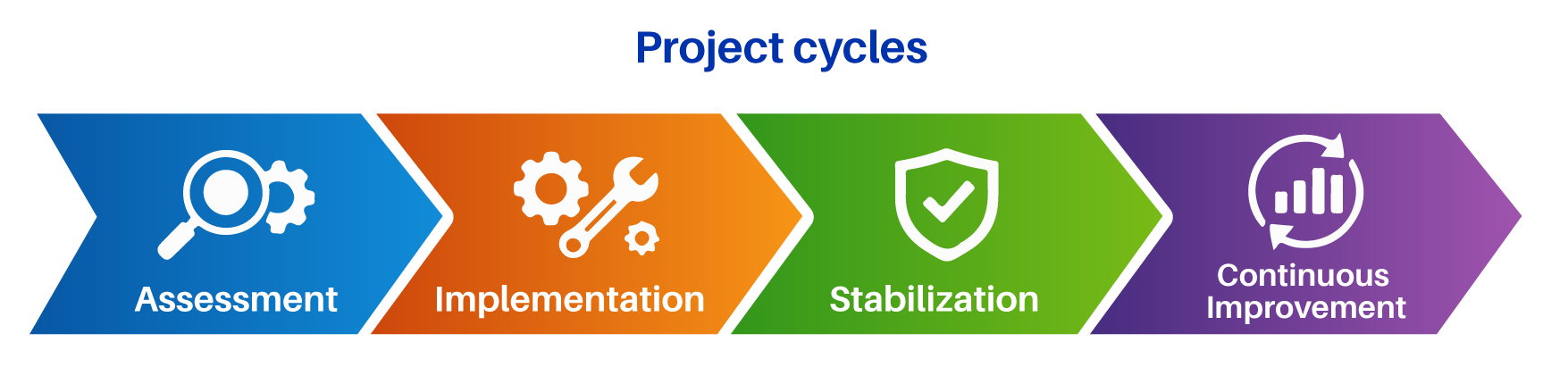
In digital transformation projects, ERP implementation or process automation, talent needs are not uniform over time. The same profiles are not required in the diagnostic phase as in the implementation phase, nor in the phase of stabilization or continuous improvement.
Organizations that try to cover all these needs exclusively with traditional hiring schemes end up facing internal overload, staff turnover and loss of speed. In contrast, companies that understand this structural change adopt more flexible models, where talent is integrated strategically, by objectives and in phases.
This change doesn't eliminate the importance of the internal team; on the contrary, it strengthens it. It allows key resources to focus on the core of the business, while external specialists accelerate execution at critical times.
What IT Staffing actually is in 2026 (and what it isn't)
In 2026, IT Staffing can no longer be understood as “resource income” or “temporary reinforcement”. That approach was obsolete. Modern IT Staffing is a strategic collaboration model, oriented to business results and not just to hedging positions.
A well-executed IT Staffing model begins with a deep understanding of the project: its objectives, its duration, its risks and its operational impact. From there, profiles are integrated that not only master a specific technology, but who understand the business context where that technology is implemented.
Strategic staffing is characterized by precision. Each profile has a clear role, defined objectives and participation aligned with a governance structure that ensures results. It's not about volume, but about expertise and proven experience.
On the contrary, Staffing IT It's not generic labor, it does not permanently replace internal equipment nor does it work as an improvised solution for putting out fires. When properly understood, it becomes a natural extension of the internal team, not a vendor disconnected from the reality of the business.
Why traditional hiring no longer responds to current reality
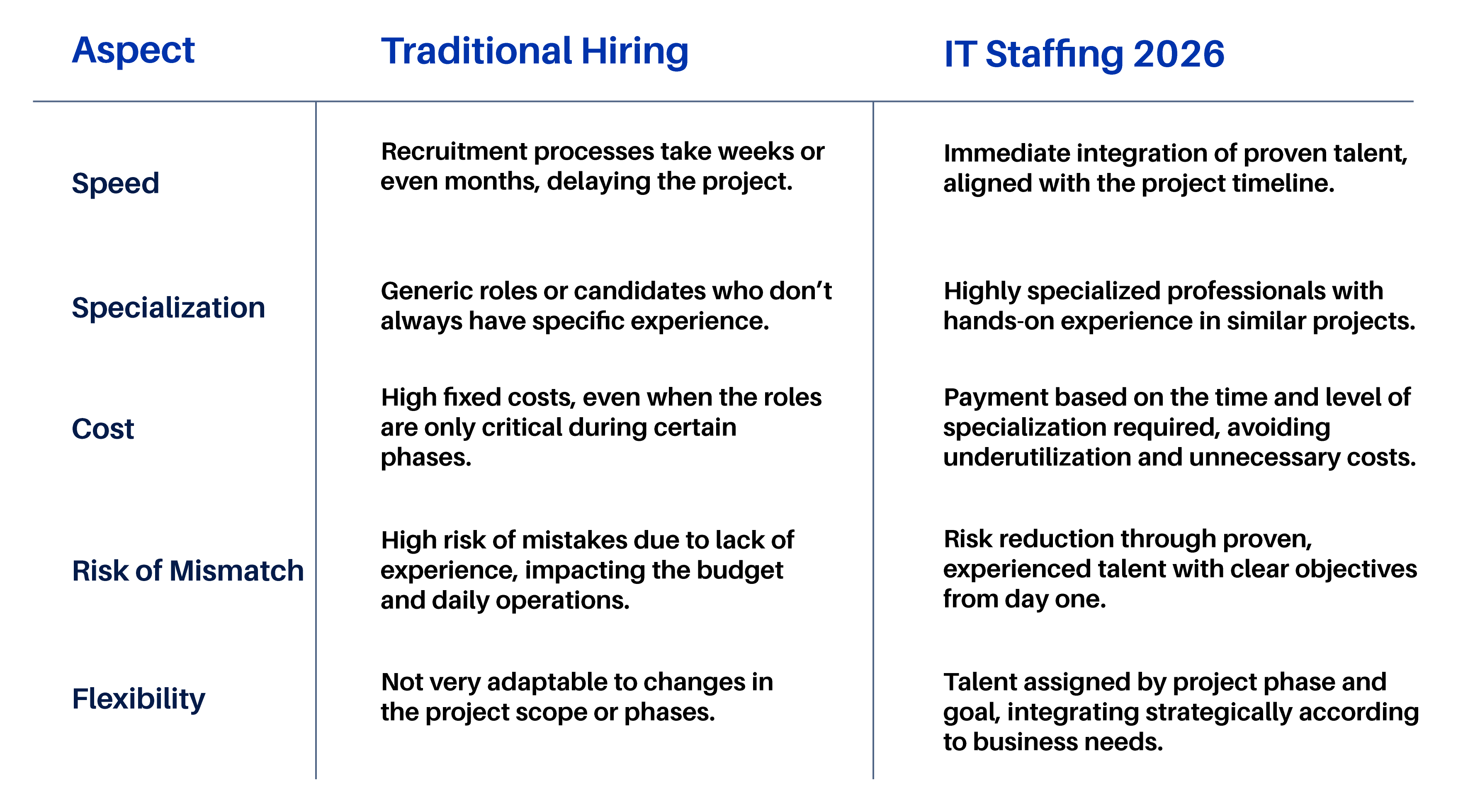
Business times in 2026 don't match traditional hiring times. While a technological project requires progress in weeks, recruitment processes can take months, causing delays from the start.
In addition to time, there is a significant risk associated with the permanent hiring of highly specialized profiles. Many of these roles are only critical during a specific phase of the project, leading to high fixed costs and an underutilization of talent once that stage is over.
Added to this is the risk of hiring profiles with no real experience in similar projects. In initiatives such as Odoo implementations, SAP or complex integrations, errors resulting from poor hiring not only impact the budget, but also directly affect the daily operation of the business.
IT Staffing reduces these risks by integrating proven talent, with specific experience and with clear expectations of results from day one.
The most requested IT profiles in 2026
The market technological evolution towards a high specialization. Today, companies are not looking for generic profiles, but rather experts with concrete experience in specific contexts.
Among the most requested profiles are functional consultants from Odoo and SAP, who translate business needs into functional configurations aligned with real processes. Their knowledge avoids generic implementations that don't provide value.
Solution architects play a key role in designing technological architecture, defining system integrations, scalability and sustainability. Digital business analysts connect operational areas with technology, identifying opportunities for improvement based on real data.
Finally, technology project leaders and integration and automation specialists ensure execution, risk control and alignment between technical and business teams. These profiles are not usually easily found in traditional hiring schemes, but they are critical to the success of projects.
How IT Staffing accelerates Odoo, SAP and Digital Transformation projects
One of the most obvious benefits of Staffing IT is the reduction of the learning curve. Integrating specialists with real experience allows us to move forward from day one, avoiding common mistakes and improvised decisions.
In Odoo and SAP projects, the impact is especially clear. Specialized consultants know good practices, understand the limitations of the platform and know how to adapt it to real business needs. This translates into shorter, more controlled implementations with a higher return on investment.
In addition, these profiles provide a cross-sectional view of the business. They not only understand the system, but how it interacts with financial, operational and business processes. The speed provided by IT staffing is not improvisation, but informed and controlled execution.
The role of IT Staffing within Digital Transformation

Digital transformation doesn't happen in a single phase or with a single type of talent. It requires different profiles at different times: diagnosis, design, implementation, integration, optimization and continuous improvement.
Staffing IT allows you to build hybrid teams, where external talent complements and empowers the internal team without displacing it. This model reduces resistance to change, facilitates knowledge transfer and maintains internal control of the project.
When properly implemented, IT staffing does not generate dependency, but rather organizational maturity.
Cost Control and Risk Mitigation

Contrary to common perception, well-executed IT Staffing is often more financially efficient. By paying only for the time and expertise needed, companies improve budgetary predictability and avoid unnecessary fixed costs.
From the point of view of operational risk, integrating profiles with proven experience reduces design errors, rework and incorrect technical decisions that often have a high impact in the long term.
In critical projects, this combination of financial control and risk mitigation can make the difference between a successful project and a problematic one.
Real cases: impact of well-executed IT Staffing
Organizations that adopted strategic IT Staffing models have achieved successful ERP implementations without additional costs, significant reduction in project time, strengthening of internal teams and greater digital maturity.
The common factor in all these cases is clarity in objectives, roles and expectations from the start of the project.
Common Mistakes When Implementing Staffing IT
Although the model is powerful, it's not risk-free if poorly implemented. Some common errors include not clearly defining the scope of the role, integrating profiles without an adequate governance structure, or not planning knowledge transfer.
IT staffing requires direction, follow-up and leadership. Without these elements, it loses effectiveness and becomes an expense without impact.
How to choose a Staffing IT partner in 2026

Choosing a Staffing IT partner involves much more than evaluating costs or profile availability. A strategic partner must understand the business, the objectives of the project and the risks associated with execution.
It must offer profile validation, ongoing support and proven experience in similar projects. In critical initiatives such as ERP implementations or digital transformation, the staffing partner becomes a strategic ally, not a simple supplier.
The right talent defines the speed of business
In 2026, competitive advantage is not only in strategy or technology, but in the ability to execute quickly and well. IT Staffing has established itself as one of the most effective tools to achieve this.
Companies that understand this don't hire more people; They integrate better talent.